
Commercial lockouts
A business that cannot open is losing money by the minute. Lockouts at storefronts, offices, suites and back-of-house doors are handled as an emergency, day or night.
- Cannot open
- Staff locked out
- Key not working
Commercial locksmith · Lawrenceville, GA
Commercial jobs carry consequences a house does not: staff who cannot start a shift, a storefront that cannot open, a former employee whose key is unaccounted for.
What we handle
Offices, retail, multi-tenant suites and back-of-house doors in and around Lawrenceville.
A business that cannot open is losing money by the minute. Lockouts at storefronts, offices, suites and back-of-house doors are handled as an emergency, day or night.
A key hierarchy designed on purpose: one key for the people who need every door, restricted keys for everyone else. Designed properly up front, it still makes sense after three staffing changes.
Resetting existing cylinders so old keys stop working — after a staff departure, a lease change, a lost key or an incident where key control is uncertain.
Commercial-grade cylinders with pick and drill resistance and controlled key duplication, so a key cannot quietly be copied at a hardware store.
Card readers, fobs and keypads so access is administered rather than physically handed out. Revoking a former employee becomes a database change instead of a building-wide rekey.
Code and credential entry for doors where handing out keys does not scale — shared suites, back doors, storage areas and rooms with rotating access.
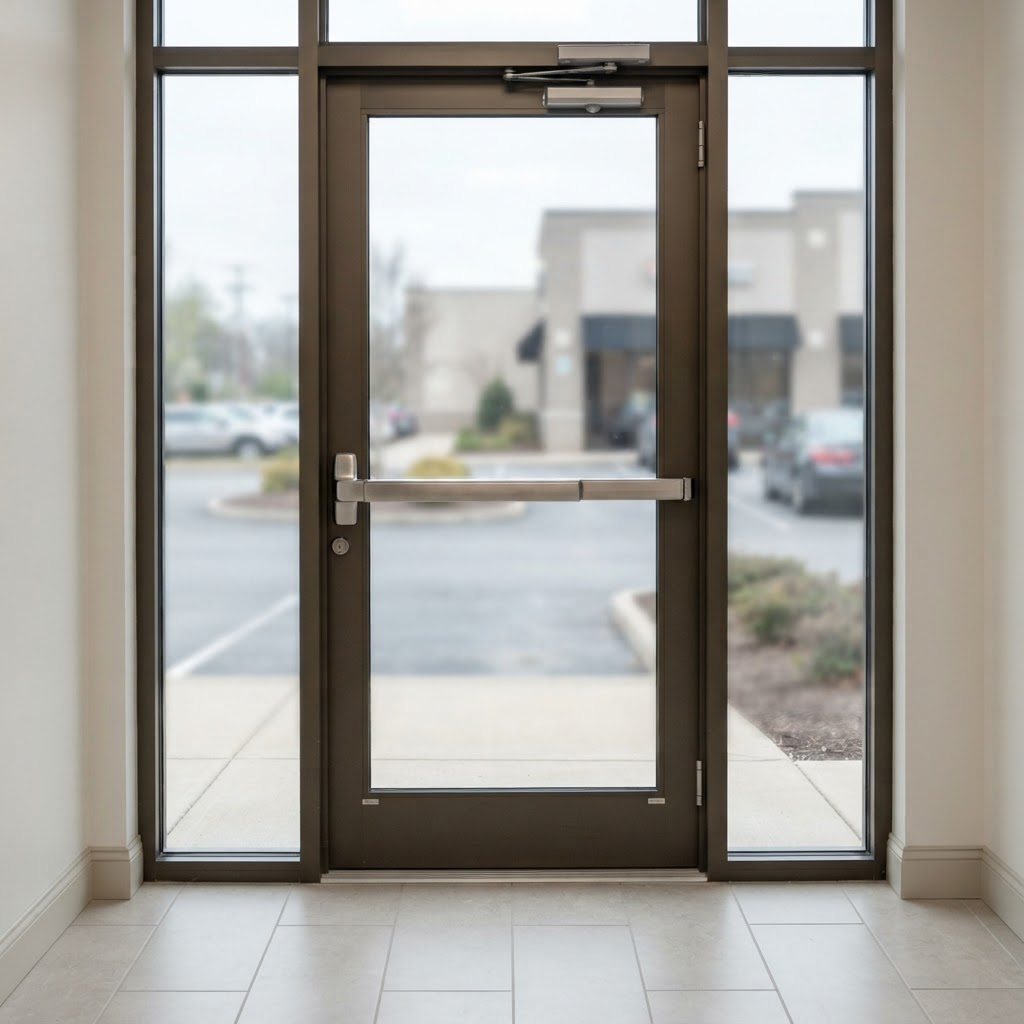
Exit hardware that lets people out instantly while keeping the door secured from outside. This is the part of commercial door hardware with the least room for improvisation.
Closers, strikes, levers, mortise locks and the rest of the assembly, specified and fitted so the whole opening works as one unit rather than a pile of parts.
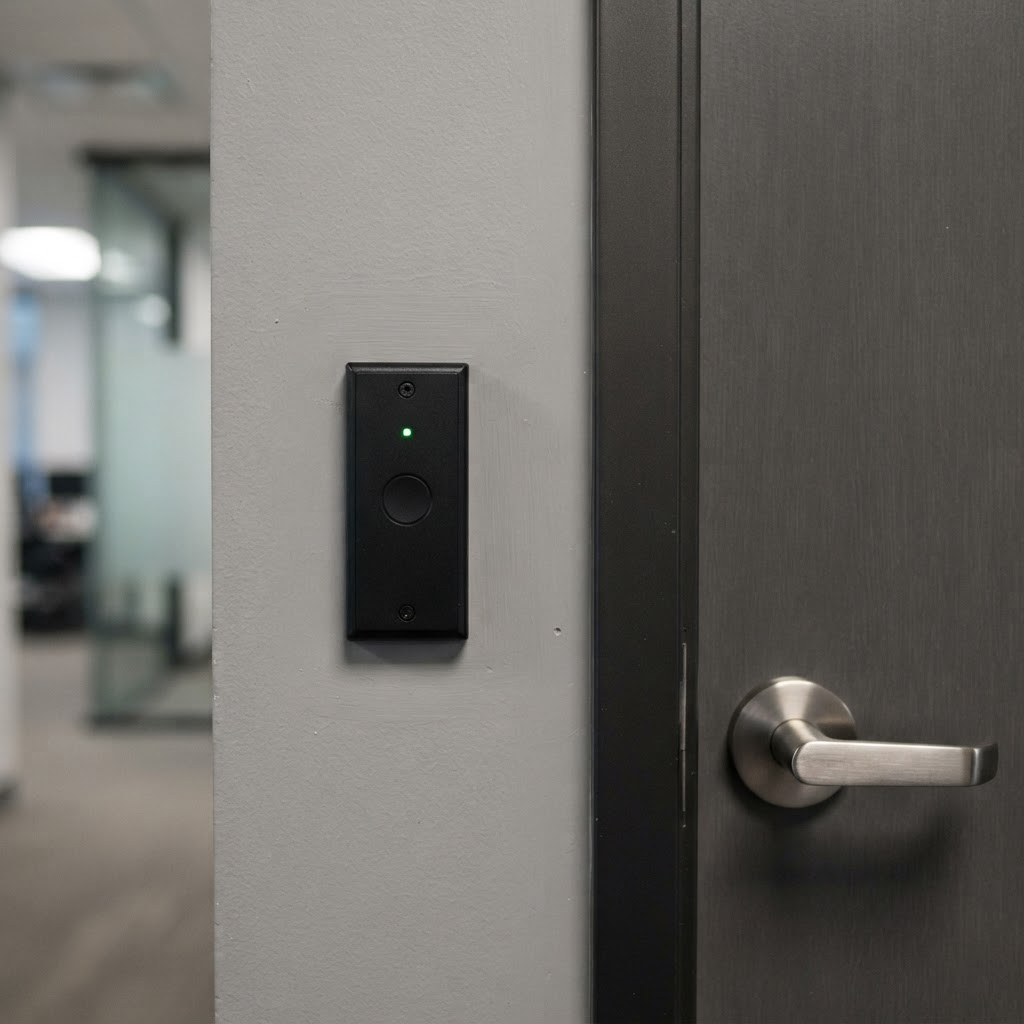
Keys or credentials
Almost every commercial locksmith conversation eventually becomes the same question: how quickly do you need to be able to take someone's access away?
How it works
01
How many openings, what type they are, and who currently holds what. This is usually a phone call, sometimes a site visit.
02
Who should open which door, and how fast that needs to change when someone leaves. The answer drives keys versus credentials.
03
Cylinders, exit devices, readers and closers chosen for how the site is actually used, not for a generic spec sheet.
04
Hardware fitted and tested, systems programmed, and you leave with a clear picture of how to administer it.
Request service
Door count, door type and who needs access to what. Get those down and the first call can be a real conversation instead of twenty questions.
Step 1
Step 2
Choose a category above to see the options.
Step 3
Step 4
Step 5
The details that matter depend on whether this is a vehicle, a home or a business.
Never share alarm codes, PINs, access-control credentials or passwords — a locksmith does not need them to quote your job.
Step 6
Your service request
Start at step 1 — we'll assemble your request as you go.
Locksmith Lawrenceville Pro takes service requests by phone so a real person can qualify the job before anyone is dispatched. Nothing on this page is submitted anywhere — it just gets your details in order before you call.
Questions
A master key system is a deliberately designed hierarchy of keys: a master that opens everything, sub-masters for groups of doors, and individual keys that open only one. It is worth it once you have enough doors and enough people that handing out a separate key for every opening becomes unmanageable.
It depends on how often access needs to change. Keys are simple and have no ongoing administration, but revoking one means rekeying. Access control costs more up front and adds administration, but removing someone takes seconds. Sites with frequent staff turnover usually justify access control quickly.
Rekey the affected cylinders. Until that is done you do not control who can enter, and an unreturned key is one of the most common triggers for a commercial rekey. If this happens often, that is a strong argument for moving those doors to credentials.
Yes — installation, repair and replacement of exit hardware, along with the closers, strikes and cylinders that work alongside it. Exit hardware is safety-critical, so it is worth addressing the moment it stops operating cleanly.
Yes. We are reachable 24/7, and for commercial jobs there is often good reason to schedule work outside trading hours so the business is not disrupted while doors are out of service.
The owner, or someone able to demonstrate they are authorised to make changes to that property. We will ask for identification and proof of authorisation before changing access on a commercial site — this protects you as much as it protects us.
Usually. Extending or rekeying an existing system is often more practical than starting over, particularly on sites with consistent, good-quality hardware. Where the existing mix is inconsistent or failing, we will say so rather than build on top of it.
Locksmith Lawrenceville Pro
Automotive, residential and commercial locksmith services in Lawrenceville, Georgia. One call gets you a straight answer about whether we can help, what it involves and what it is likely to cost.
(678) 585-6089